
Goat Digestion
Have you ever wondered what makes goats so great for managing unwanted plants? Well, in addition to their voracious appetites and expansive palates, goats are ruminates, which means their stomachs are made up of four compartments. Unlike us “simple-stomached” humans, goats process their food through four chambers. Of which, the first two are essentially fermentation vats, a key feature that allows goats to digest high levels of fiber and nutrients from their plant-based diets. The four chambers, in order, are the reticulum, rumen, omasum, and abomasum.
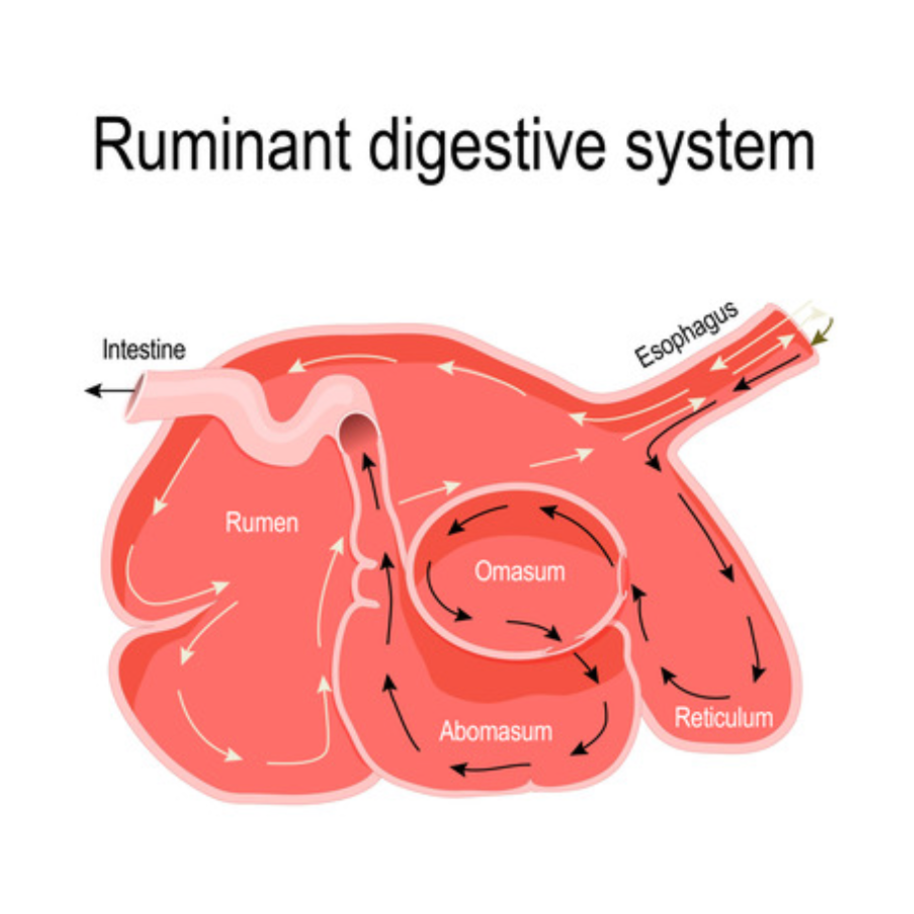
First, the food enters the reticulum and rumen — commonly called the “reticulo-rumen” where it undergoes microbial digestion. Bacteria in the rumen synthesize protein and all B vitamins goats need. The reticulo-rumen is also where much of the energy from their diets is processed and absorbed. Next, the food enters the omasum. Here, the remaining large food particles are trapped and further digestion occurs. It’s also where water is reabsorbed. Finally, the material travels through the abomasum where enzymatic and acidic digestion occurs, similar to how our human single-stomachs function, prior to entering the small intestine.
This entire process is what allows goats to be such prodigious consumers of plants. It doesn’t, however, allow them to eat tin cans, as the old myth goes. While they can eat a variety of plants and, yes, even poison ivy!, they cannot eat toxic plants like yew, milkweed, poison hemlock, or plants in the nightshade family, like tomatoes, peppers, eggplants, or potatoes.
Do you wish your stomach had four compartments? (Or at least an extra one just for dessert?!)
References & image credit: https://goatjournal.iamcountryside.com/health/understanding-the-goat-digestive-system-avoids-tragedies/ & https://goats.extension.org/goat-nutrition-gi-tract/
