
Plant Spotlight: Mile-A-Minute
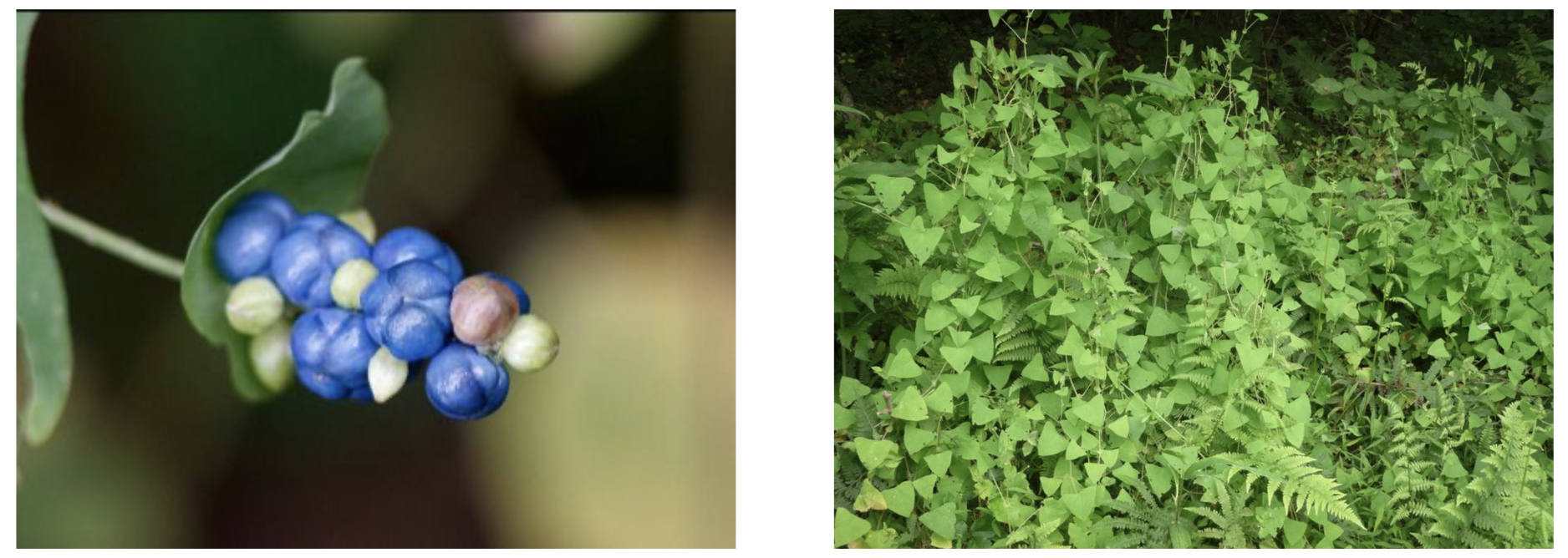
Mile-a-minute fruit and vining triangular leaves
Mile-a-minute, Persicaria perfoliata,
Originally from India and East Asia, mile-a-minute was first reported in York County, Pennsylvania, in the 1930s.
Unlike other invasive vines, mile-a-minute dies each fall and new plants grow from germinating seeds in the spring. The dense foliage of this invasive weed blankets and slowly suffocates native vegetation, making it extremely destructive and persistent. During winter the tangle of dead stems persists, forming a mat over desirable vegetation, continuing to be a problem even when it is not actively growing.
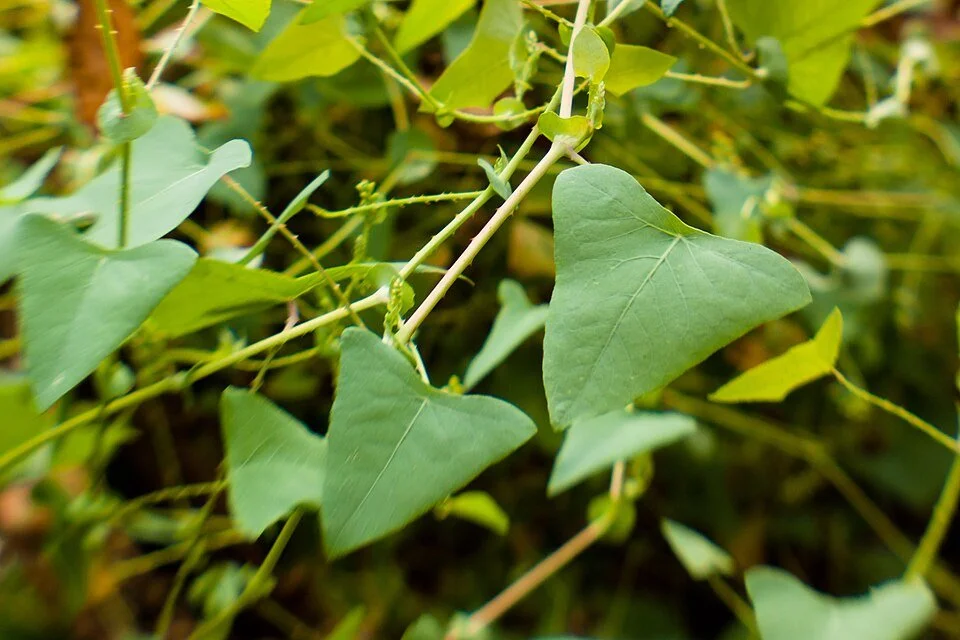
The leaves have a very distinct triangular shape that are typically between one to three inches wide. The stems are covered in tiny hooked barbs, helping the plant quickly climb. Round leaflike structures, called ocreae, completely encircle the main stem at the base of each leaf. Mile-a-minute produces metallic blue or purple berrylike fruit in late summer. The fruit appear in an elongated cluster at the vine's tips.
Here’s where we come in…
Although we know that goats will eat a wide variety of plants [LINK Goat Digestion or What We Eat], Allegheny GoatScape exists to target specific types of plants to help mitigate the growth and spread of particular plants with invasive traits. Goats are particularly adept in the management of this vine for two particular reasons. First, it primarily spreads through its seeds. Due to a goat’s four chambered stomach, when seeds leave the goat after digestion, they are not viable, eliminating the spread of the seed. Additionally, due to the plants barbed stems, it can be difficult to remove manually. Goats, however, have quite mobile upper lips and prehensile (an appendage that has adapted for grasping) tongues which help them selectively grab food and avoid thorns.
You can learn more about mile-a-minute, and many other invasive plant species, by visiting the Pennsylvania DCNR.
More to chew on…




Want to help your local ecosystems thrive?