
Using Goats to Clear Overgrown Invasive Plants
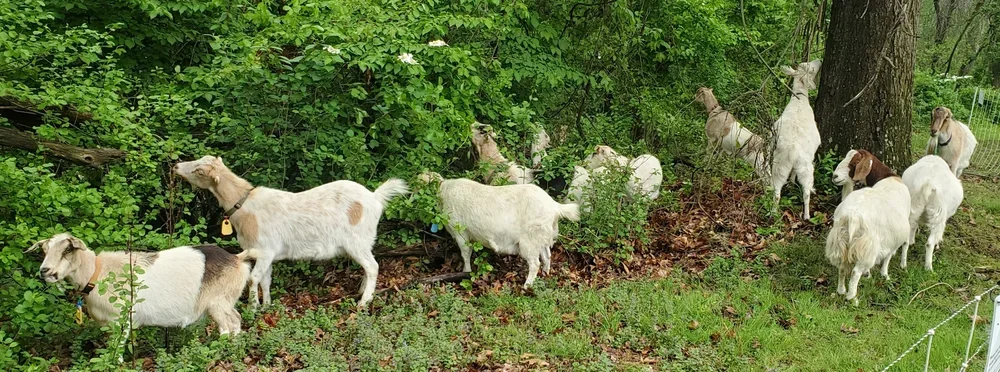
A New Solution to an Old Problem
We use our goats to target plants that are designated as invasive species by the Pennsylvania Department of Conservation and Natural Resources (DCNR). An invasive plant is defined as one that is not native to a region, spreads rapidly, and causes economic harm, environmental damage, or risks to human health. These plants can take many forms, including vines, shrubs, herbs, and trees. Humans introduced most of them here as ornamental plants during the nineteenth century. Allegheny GoatScape focuses on plants that threaten native plant species and local ecosystems.
Preserving the Balance
Allegheny GoatScape focuses on vegetation that poses a direct threat to native plant communities and local ecosystems. As part of responsible land management, we prioritize areas where invasive growth is actively disrupting ecological balance.
As part of responsible land management, we prioritize areas where invasive growth is actively disrupting ecological balance.
Damage to Local Ecology
Invasive plants damage local ecology through several mechanisms. Their rapid, dense growth can crowd out native species or block the sunlight and water required for healthy plant development. Vining plants, such as bittersweet, often climb and envelop trees, adding weight that can break branches or even topple entire trees.
In riparian areas, invasive growth reduces native riverbank vegetation, diminishing an essential nutrient source for aquatic and terrestrial wildlife. Additionally, some invasive plants contribute to soil erosion because their shallow root systems are less effective at stabilizing soil during heavy rain or flooding.
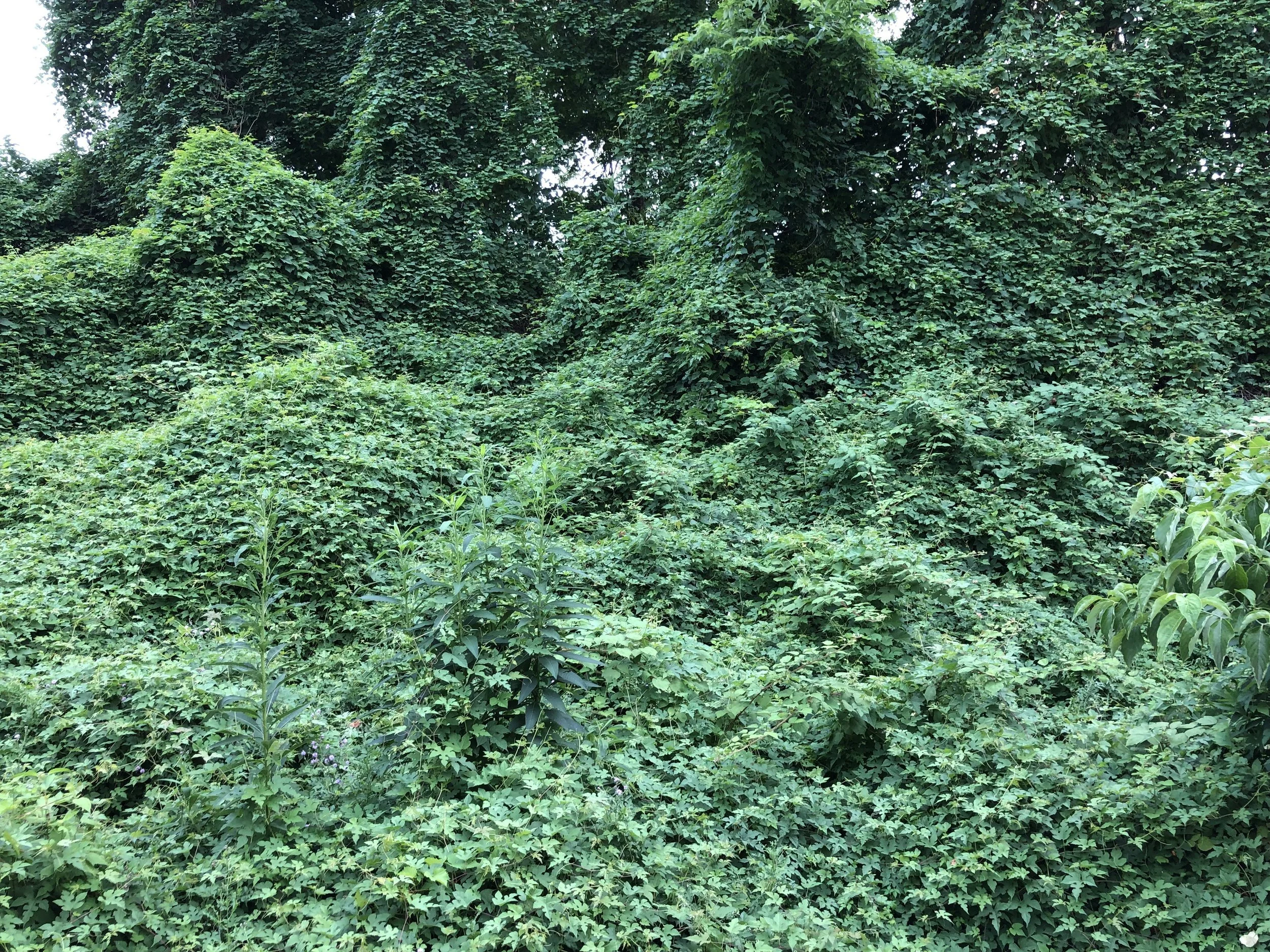
Invasive plants decrease biodiversity
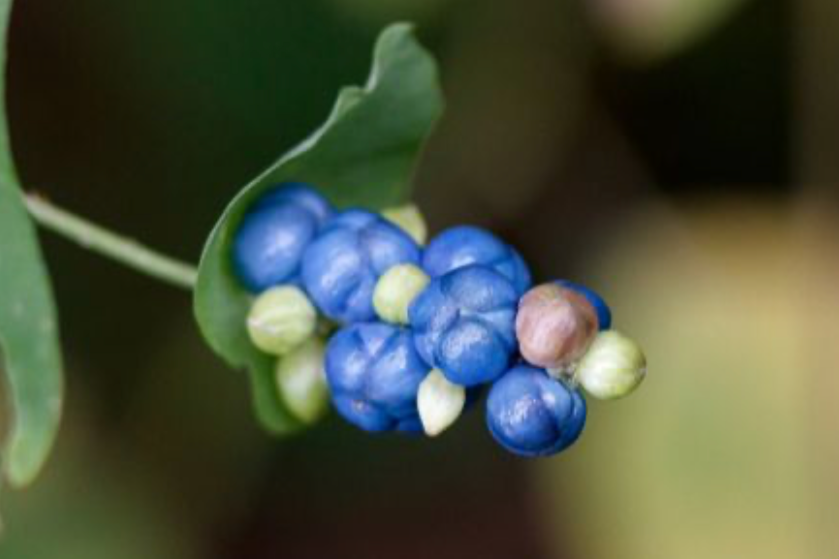
This Image shows porcelain berry vine overgrowing on trees and shrubs in Highland Park. The extent of this vine’s growth has blocked sun, water and nutrients for other plants, limiting the number of other plants that can thrive here.
Improving Community Health
These ecological impacts also affect community health and well-being. The Pittsburgh region is rich in greenspaces and waterways that support recreation, wildlife observation, and everyday access to nature. However, many of these areas become inaccessible due to overgrowth and unwanted vegetation. Our goats help restore access by naturally clearing dense vegetation in an ecologically friendly way.
Our herds also consume vegetation that is harmful or problematic for people and pets, including poison ivy and wild grapevine, further improving site safety and usability.
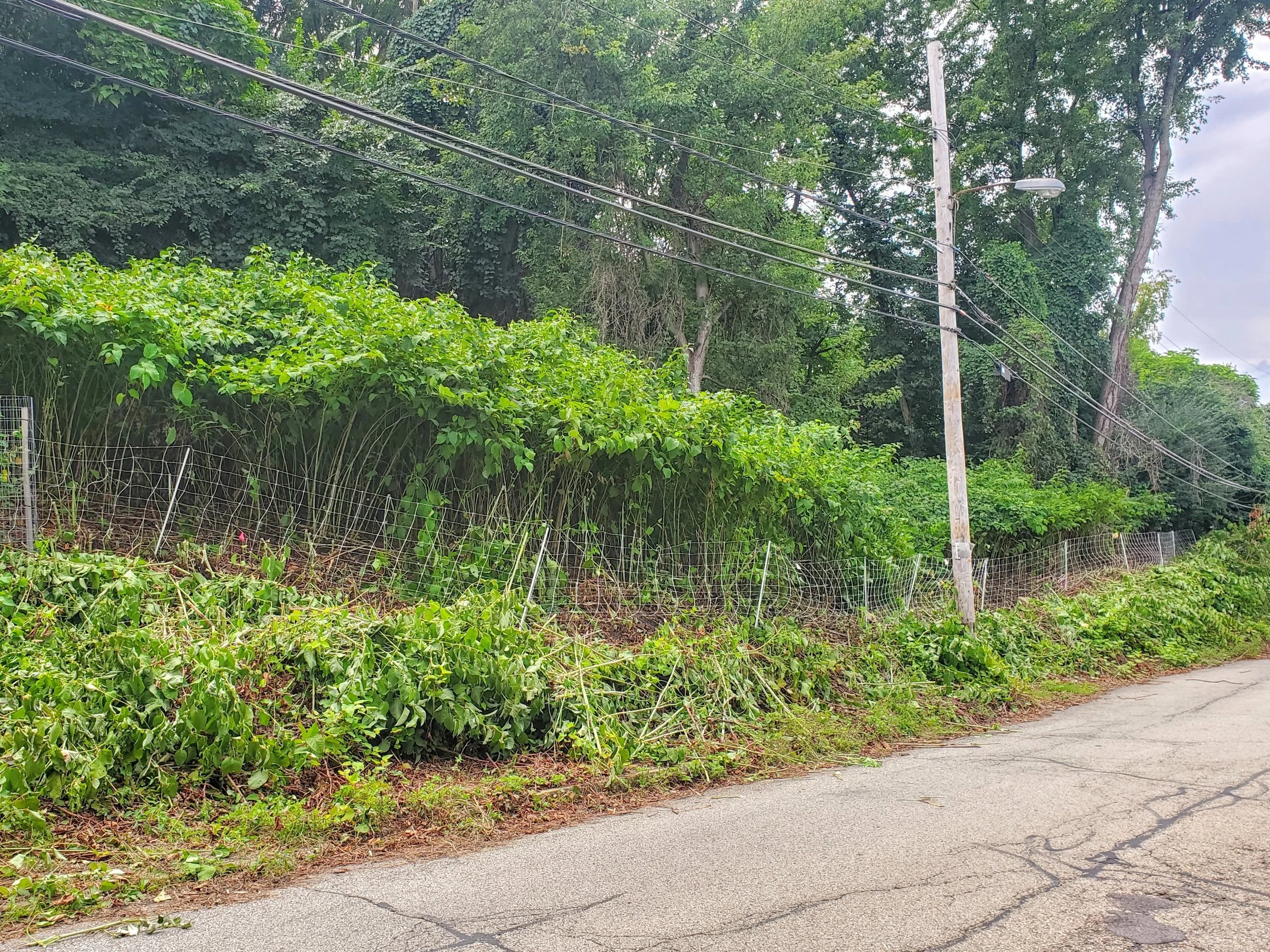
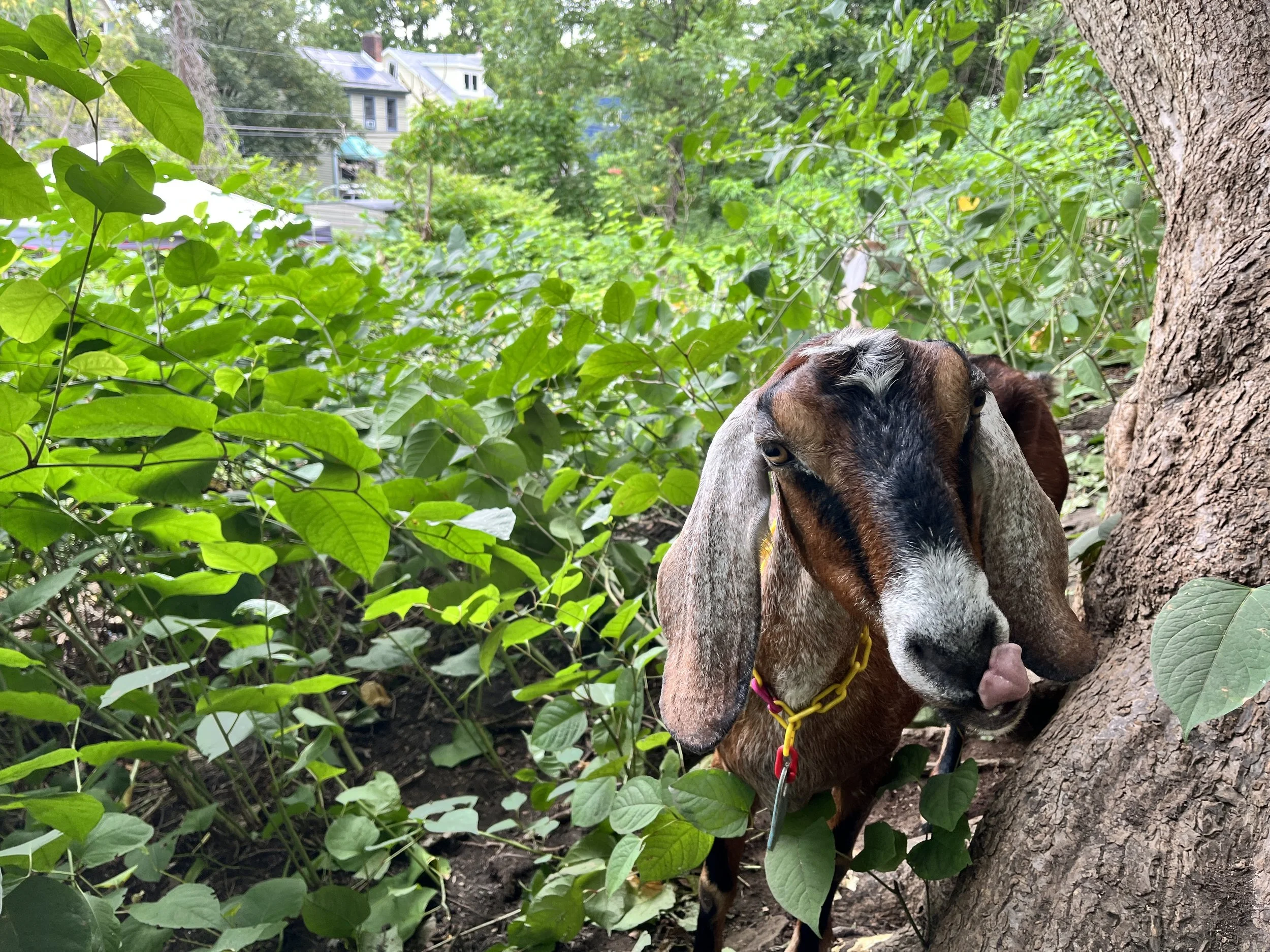
Knotweed overgrowth in local neighborhood
This Image shows a roadside in Polish Hill where knotweed has crowded out other plants and taken over.
So, what can our goats eat?
Goats will readily eat all kinds of invasive plants, shrubs, vines, and groundcover. Some of these species are considered noxious to people and pets, and some are nonnative ornamental plants that have taken over an area. For a list of the common plants our herd will clear, check out our article: What Plants Can our Goats Eat?
Learn More About Invasive Plants
Fact sheets on these and other invasive plants are available from the Pennsylvania Department of Conservation and Natural Resources.
More to chew on…
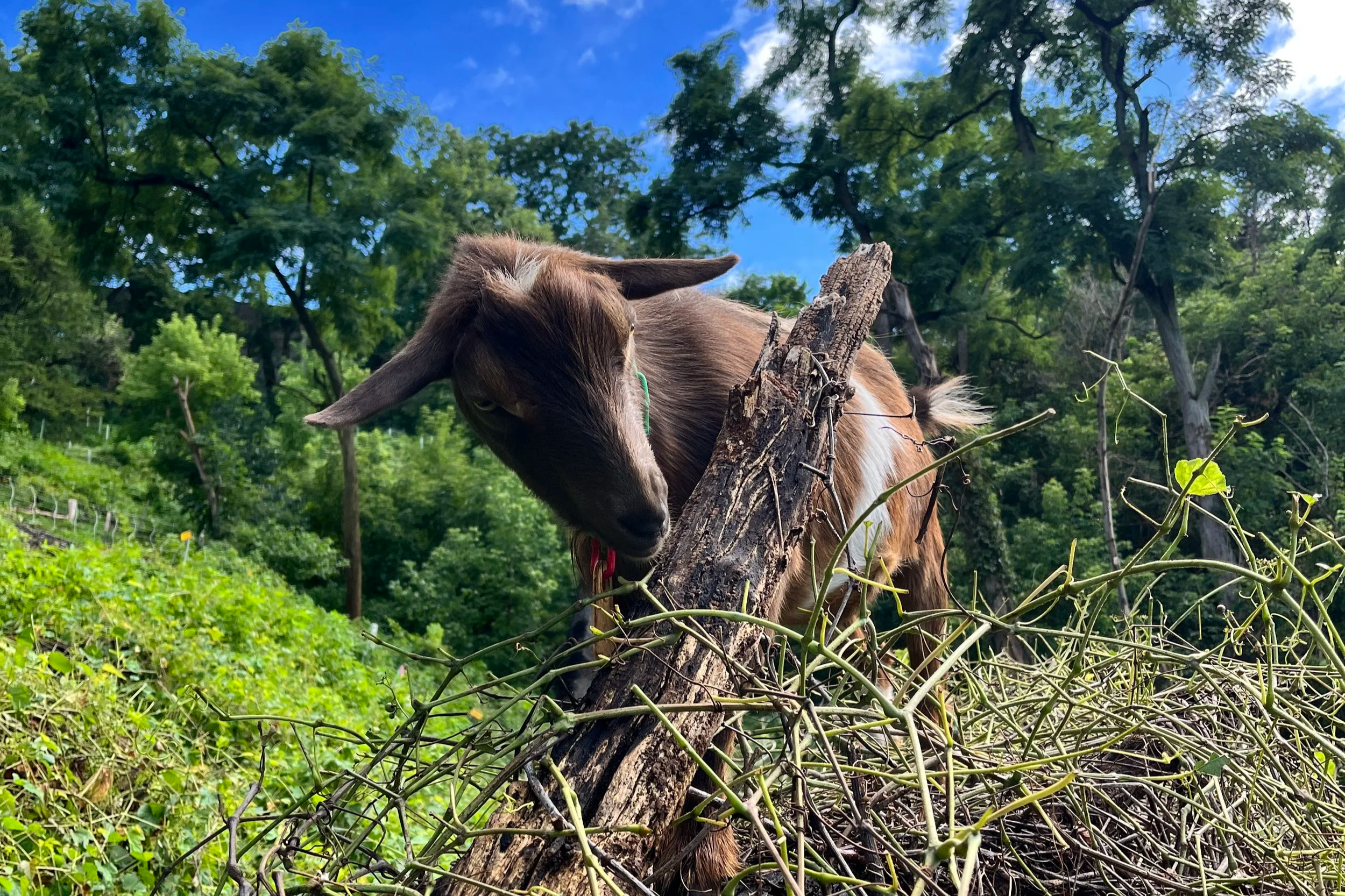

Want to help your local ecosystems thrive?